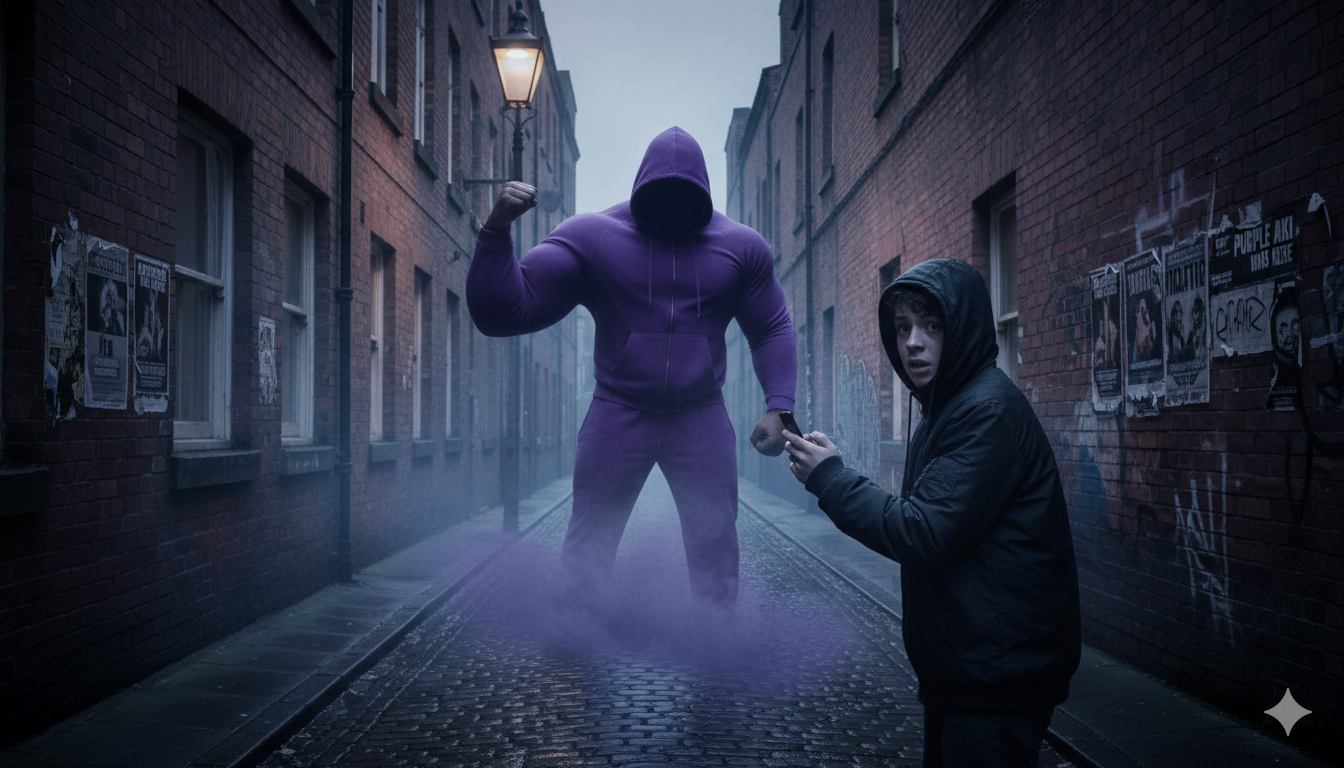
Have you ever heard a story that sounds like it came straight out of a movie, but it actually happened in real life? In many parts of the United Kingdom, especially around the North West, people have shared tales of a man known as purple aki. For decades, his name has been whispered on playgrounds, in gyms, and across social media. But who is the person behind the nickname, and why has he become such a massive part of modern folklore? Today, we are going to look closely at the facts, the myths, and the impact this individual has had on popular culture. Understanding the story of purple aki requires looking at both legal history and the way stories spread in the digital age.
Who Exactly is the Man Known as Purple Aki?
To understand the legend, we first have to look at the man himself. His real name is Akinwale Arobieke. He is a very tall, muscular man who became famous for a very unusual reason. Unlike most celebrities who are known for acting or sports, purple aki became known for his strange habit of approaching young men and asking to feel their muscles.
This behavior started many years ago in areas like Liverpool and Manchester. Because he was so easy to spot and his actions were so repetitive, he quickly became a local fixture. People began to create stories about him, and soon, the nickname purple aki was born. It is important to remember that while the stories can seem funny or weird to some, there is a very real person at the center of all this attention.
The Origin of the Famous Nickname
You might wonder why people started calling him purple aki in the first place. The “Aki” part is simply a shortened version of his first name, Akinwale. The “purple” part of the name is a bit more debated. Some say it refers to the deep tone of his skin when he gets active or angry, while others think it was just a catchy name created by local kids.
Regardless of how it started, the name stuck. Using the name purple aki became a way for people to identify him without using his full legal name. Over time, the nickname became even more famous than the man himself. It turned into a brand of sorts, appearing in memes, songs, and even television shows. This shows how a simple nickname can transform a person into a larger-than-life character.
Why Did He Become a Local Legend?
Most urban legends are about ghosts or monsters that don’t exist. However, purple aki is a real human being. He became a legend because he was “hiding in plain sight.” People would see him at bus stations, outside gyms, or walking down the street. The fact that anyone could run into him made the stories feel more immediate and scary for some.
In the 1980s and 90s, before everyone had smartphones, stories about purple aki were passed down from older brothers to younger brothers. This “word of mouth” method made the tales grow taller and more exaggerated. By the time the internet arrived, the foundation of the legend was already built. He wasn’t just a man anymore; he was a phenomenon that everyone in the region knew about.
The Legal Side of the Story
It is very important to talk about the legal history when discussing purple aki. This isn’t just a story about a man who likes muscles; there are many court cases involved. Over the years, Akinwale Arobieke has been banned from certain areas and forbidden from touching people’s muscles without permission. These legal orders are often called “SOPAs” (Sexual Offences Prevention Orders).
Because he often broke these rules, he spent a significant amount of time in prison. These court dates and news reports added a layer of “truth” to the urban legends. When people saw purple aki in the newspaper, it confirmed that the man they heard about on the playground was real. This mix of real-life crime and neighborhood gossip is what kept the story alive for over thirty years.
The Role of Social Media and Memes
In the last ten years, the story of purple aki has changed because of the internet. Instead of just being a local story in Liverpool, he became a global meme. People started sharing photos and videos of him on Twitter, Reddit, and YouTube. This introduced him to a whole new generation of people who didn’t live in the North West of England.
While some people find the memes funny, others point out that it can be a form of bullying. The internet often forgets that there are real people behind the pictures. The fame of purple aki in the digital world shows how quickly a local story can turn into a worldwide topic. It also highlights how the internet can turn a serious legal situation into a joke or a piece of entertainment.
Impact on the Local Community
In places like New Brighton, Birkenhead, and St Helens, purple aki is a name that almost everyone recognizes. For many who grew up there, he was a “boogeyman” figure used to keep kids from staying out too late. “Watch out, or purple aki will get you!” was a common phrase used by parents and peers alike.
However, as people got older, the perspective shifted. Some saw him as a nuisance, while others felt he was a misunderstood person with mental health struggles. The presence of purple aki in the community created a shared history for many people. Whether you liked him, feared him, or just ignored him, he was a part of the environment that shaped life in those towns for a long time.
Understanding the Fascination with Muscle Growth
The core of the purple aki story is his obsession with muscles. He would often ask young men if he could “squeeze” their biceps or “feel” their power. This is a very specific and unusual interest. In his mind, it seemed like a hobby or a fascination with fitness and strength.
To the people he approached, it was often uncomfortable and intrusive. This clash of perspectives is what led to so many police calls. While many people go to the gym to build muscles for themselves, purple aki wanted to experience that strength through others. This unique behavior is what separates him from almost any other well-known figure in the UK today.
Television and Documentaries
The story became so big that even the BBC made a documentary about him called “The Man Who Squeezes Muscles.” This film tried to look past the memes and find the real Akinwale Arobieke. It interviewed people who knew him and tried to explain why he does what he does.
Seeing purple aki on a major TV channel was a huge moment for the legend. it validated all the stories people had been telling for years. The documentary also showed how difficult his life has been because of his reputation. It’s hard for a man like purple aki to live a normal life when his face and nickname are known by millions of people who have never even met him.
Comparing Myth vs. Reality
It is easy to get lost in the crazy stories about purple aki. Some legends claim he can jump over high fences or that he has “superhuman” strength. These are obviously not true. When we look at the reality, he is a man who has struggled with the law and his own obsessions for a very long time.
Separating the myth from the reality is important for E-E-A-T (Expertise, Authoritativeness, and Trustworthiness). We must recognize that purple aki is a human being with rights, even if his behavior is strange or against the law. By looking at the facts, we can see how society creates “monsters” out of people they don’t understand. The real story is often much more complicated than the simple memes we see online.
The Future of the Legend
As time goes on, Akinwale Arobieke is getting older. Will the legend of purple aki eventually fade away? It’s hard to say. Because of the internet, his name will likely live on in archives and social media posts for a very long time. Even if he stops appearing in public, the stories will remain.
New urban legends might take his place, but it’s unlikely we will see another figure quite like purple aki. He represents a specific time in history where local gossip and early internet culture collided. He will always be remembered as one of the most unusual and persistent figures in British folklore.
Quick Facts Table: The Story of Akinwale Arobieke
| Feature | Details |
| Real Name | Akinwale Arobieke |
| Common Nickname | purple aki |
| Height | Approximately 6’6″ (Very Tall) |
| Main Interest | Touching/Squeezing muscles of young men |
| Famous Locations | Liverpool, Manchester, North West England |
| Legal Status | Multiple bans and SOPAs issued over the years |
| Media Feature | BBC Three Documentary (2017) |
Conclusion: A Story Unlike Any Other
The tale of purple aki is a mix of real-life events, legal battles, and neighborhood myths. Whether you view him as a local legend or a cautionary tale, there is no denying the impact he has had on British culture. He reminds us how a single person’s unusual habits can spark the imagination of thousands.
As we move forward, it’s worth thinking about how we treat people who are different. While his actions were often illegal, the way the world reacted to him—through memes and jokes—tells us a lot about ourselves. What do you think about this urban legend? Have you ever heard stories about him in your town?
Frequently Asked Questions (FAQs)
1. Is purple aki a real person?
Yes, he is a real man named Akinwale Arobieke. He is not a ghost or a made-up character, though many stories about him are exaggerated.
2. Why is he called “Purple Aki”?
The name combines a shortened version of his first name (Akinwale) with a nickname “Purple,” which some say refers to the shade of his skin during physical activity.
3. What does he actually do?
He is known for approaching young men in public places and asking to touch or squeeze their muscles. This behavior led to many legal problems and bans.
4. Has he ever been on TV?
Yes, he was the subject of a famous BBC Three documentary titled “The Man Who Squeezes Muscles,” which explored his life and the myths surrounding him.
5. Is he dangerous?
While many people found his behavior scary or uncomfortable, he was primarily known for the muscle-squeezing habit. However, his actions were enough to lead to several prison sentences and strict police orders.