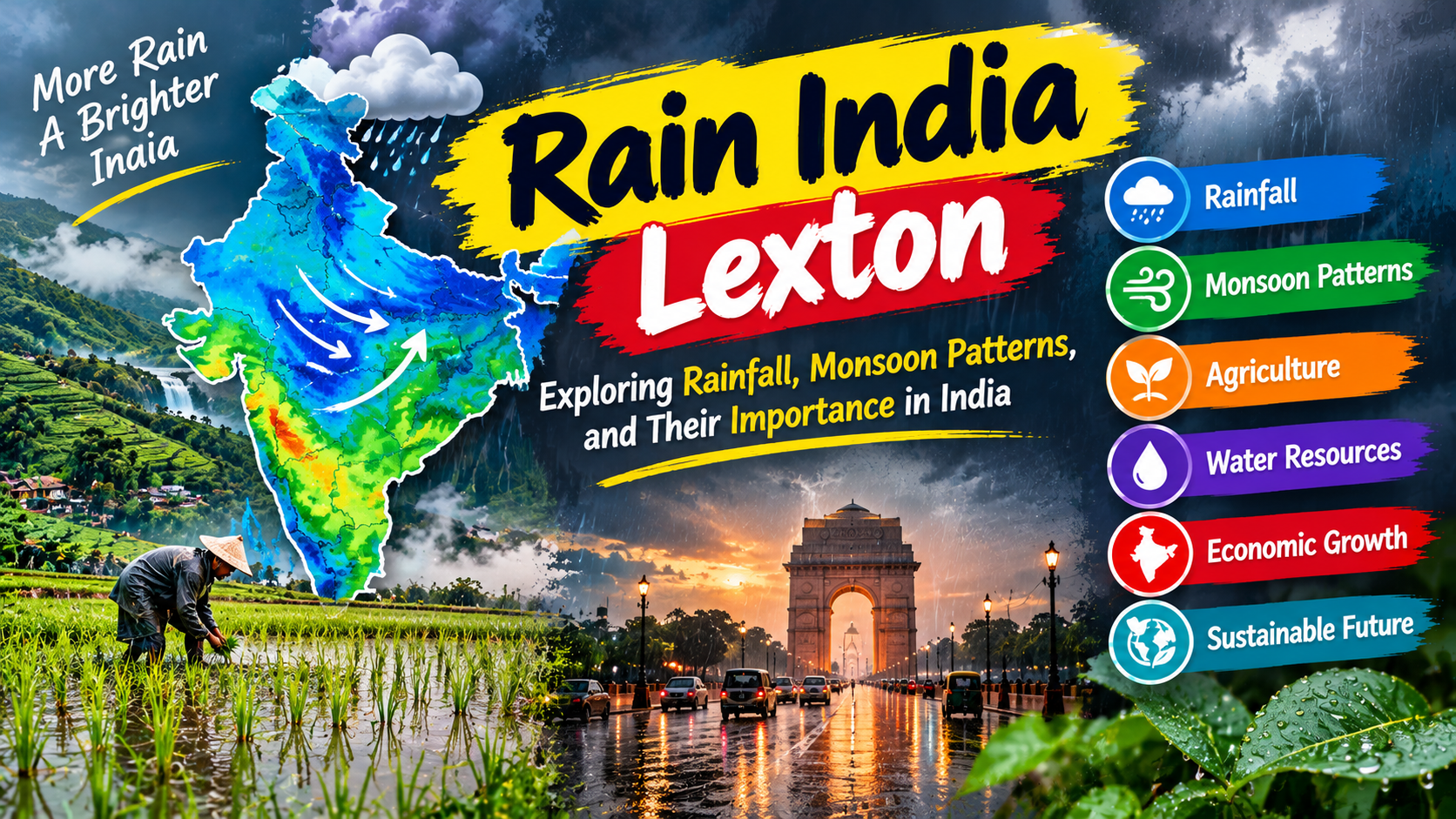
Rain plays a vital role in India’s climate, agriculture, economy, and daily life. As a country with diverse geographical regions, India experiences different rainfall patterns throughout the year. From the heavy monsoon showers in the Western Ghats to seasonal rainfall across the northern plains, rain is an essential part of the country’s natural environment. The Rain India Lexton can be used to explore information related to Indian rainfall, weather conditions, seasonal changes, and the importance of water resources.
Understanding rainfall in India helps people prepare for changing weather conditions, protect crops, manage water supplies, and reduce the risks associated with floods and droughts. In this article, we explore India’s rainfall patterns, the monsoon season, regional differences, and the importance of rain in everyday life.
What Is Rainfall in India?
Rainfall in India refers to precipitation received across the country’s different states and geographical regions. India’s weather is influenced by seasonal winds, ocean temperatures, mountain ranges, and atmospheric conditions.
The Indian climate is strongly affected by the monsoon system, which brings a large proportion of the country’s annual rainfall. However, rainfall is not evenly distributed. Some regions receive abundant precipitation, while others remain dry for much of the year.
The major factors influencing rainfall in India include:
- The southwest and northeast monsoon systems.
- The Himalayan mountain range and other geographical features.
- The Arabian Sea and Bay of Bengal.
- Seasonal wind patterns and atmospheric pressure.
- Regional temperature changes and climate variability.
These factors contribute to India’s varied weather conditions and make rainfall an important subject for farmers, researchers, businesses, and residents.
Understanding the Indian Monsoon Season
The monsoon is one of the most important weather systems in India. It generally brings widespread rainfall during the summer months and supports agricultural activities across many states.
The southwest monsoon typically arrives in Kerala around the beginning of June and progresses across the country over the following weeks. Its timing and intensity can vary from year to year.
The monsoon season is especially important because it replenishes reservoirs, rivers, lakes, and groundwater supplies. It also provides essential moisture for crops such as rice, cotton, sugarcane, and pulses.
Key characteristics of the Indian monsoon include:
- Seasonal winds carrying moisture from surrounding seas.
- Heavy rainfall in many coastal and northeastern regions.
- Significant agricultural dependence on seasonal precipitation.
- Variations in rainfall intensity across different states.
- The possibility of floods, waterlogging, and landslides during intense rain.
Understanding monsoon patterns can help communities prepare for seasonal weather changes and use water resources more efficiently.
Regional Differences in Rainfall Across India
India’s large geographical area creates substantial differences in rainfall. The climate of a coastal state can be very different from that of a desert region or a mountainous area.
Western India
Parts of Maharashtra, Goa, and Gujarat receive monsoon rainfall, although the amount varies significantly by location. The Western Ghats intercept moisture-laden winds, producing heavy precipitation on their western slopes.
Northern India
Northern states experience rainfall during the summer monsoon, while some areas also receive winter precipitation associated with western disturbances. Rainfall is important for crops such as wheat, rice, and sugarcane.
Southern India
Southern India receives rainfall from both the southwest and northeast monsoons, depending on the region. Tamil Nadu, in particular, receives a substantial share of its annual rainfall during the northeast monsoon, which generally occurs from October to December.
Eastern and Northeastern India
Several areas in eastern and northeastern India experience substantial rainfall because of moist monsoon winds and local topography. Heavy precipitation can support dense vegetation but may also increase the risk of flooding.
Western Desert Regions
Rajasthan and other dry areas receive comparatively little rainfall in many locations. Water conservation, groundwater management, and drought preparedness are particularly important in these regions.
Why Rain Is Important for India’s Agriculture
Agriculture remains an important source of livelihood for millions of people in India. Rainfall determines soil moisture, influences planting schedules, and affects crop production.
Farmers often depend on monsoon rainfall to cultivate crops when irrigation facilities are limited. Adequate rain can improve agricultural productivity, while prolonged dry spells may reduce yields and increase production costs.
The importance of rain in agriculture includes:
- Providing moisture for seed germination and plant growth.
- Replenishing soil water needed by crops.
- Supporting livestock through water availability and pasture growth.
- Refilling irrigation reservoirs and groundwater sources.
- Maintaining agricultural livelihoods in rain-dependent areas.
However, excessive rainfall can damage crops, erode soil, and delay harvesting. For this reason, reliable weather forecasts and effective drainage systems are important for agricultural planning.
The Benefits of Rainfall for the Environment
Rainfall supports ecosystems and helps maintain the natural balance of water across the environment. It replenishes freshwater sources, sustains forests, and supports wildlife.
Healthy rainfall patterns contribute to:
- Water availability: Rain fills rivers, lakes, reservoirs, and underground aquifers.
- Plant growth: Trees, grasses, and crops depend on sufficient moisture.
- Biodiversity: Many habitats rely on seasonal precipitation.
- Temperature regulation: Rain and cloud cover can influence local temperatures.
- Soil health: Appropriate rainfall supports vegetation that helps protect soil from erosion.
Rainfall also contributes to the water cycle, through which water evaporates, forms clouds, and returns to the earth as precipitation.
Problems Caused by Heavy Rain in India
Although rain provides many benefits, excessive precipitation can create serious challenges. Heavy monsoon rainfall may cause flash floods, river flooding, landslides, traffic disruptions, and damage to buildings and infrastructure.
Urban areas can be particularly vulnerable when drainage systems are blocked or unable to handle large amounts of water. Rapid construction and the loss of natural water-absorbing surfaces can make urban flooding worse.
Common problems associated with heavy rainfall include:
- Flooding in low-lying residential areas.
- Damage to roads, bridges, and public infrastructure.
- Landslides in hilly and mountainous regions.
- Crop losses and soil erosion.
- Disruptions to transport, electricity, and communication.
- Increased risks from contaminated drinking water.
Preparation is essential. Communities can reduce risks by maintaining drainage systems, monitoring weather alerts, protecting natural waterways, and avoiding flooded roads.
How to Prepare for Rainy Weather
Preparing for the rainy season can help households, farmers, and businesses minimize disruption. Simple preventive measures can improve safety and protect property.
Useful rainy-season precautions include:
- Checking official weather forecasts and rainfall warnings.
- Cleaning roof gutters and local drainage channels.
- Keeping emergency supplies and essential medicines available.
- Protecting important documents and electronic equipment from water.
- Avoiding travel through flooded streets and fast-flowing water.
- Inspecting roofs, walls, and electrical systems before heavy rain.
- Conserving rainwater where suitable storage systems are available.
Farmers can also benefit from local agricultural advisories, appropriate crop selection, and efficient irrigation and drainage practices.
Rainwater Harvesting and Water Conservation in India
Rainwater harvesting is an effective way to collect and store rainfall for future use. It can reduce pressure on groundwater supplies and help communities manage water shortages during dry periods.
Common rainwater harvesting methods include rooftop collection, storage tanks, recharge pits, and specially designed ponds. The appropriate method depends on local rainfall, soil conditions, available space, and water needs.
The main benefits of rainwater harvesting are:
- Better use of seasonal rainfall.
- Reduced dependence on groundwater.
- Support for groundwater recharge.
- Improved water availability during dry periods.
- Reduced runoff when systems are properly designed and maintained.
For long-term water security, rainwater harvesting should be combined with responsible water use, watershed management, and protection of lakes and wetlands.
The Role of Weather Forecasting and Technology
Modern weather forecasting helps people understand expected rainfall and prepare for changing conditions. Meteorological agencies use satellites, weather radar, ground-based instruments, and computer models to monitor weather systems.
Accurate forecasts can help farmers plan agricultural activities, transport operators prepare for disruptions, and local authorities organize emergency responses.
People searching for information related to Rain India Lexton may also be interested in rainfall updates, monsoon forecasts, regional weather reports, and practical advice for managing rainy conditions. For reliable information, it is best to consult official meteorological sources and local government alerts.
Conclusion
Rainfall is essential to India’s agriculture, water supply, biodiversity, and economy. The country’s varied geography creates different rainfall patterns, making local weather information especially important. While regular rain supports crops and replenishes freshwater resources, excessive precipitation can lead to flooding, landslides, and infrastructure damage.
By understanding monsoon patterns, following weather forecasts, preparing for heavy rain, and adopting rainwater harvesting practices, individuals and communities can benefit from rainfall while reducing its risks.
The keyword Rain India Lexton can serve as a starting point for exploring topics related to India’s rainy season, regional precipitation, monsoon weather, and water conservation. Accurate information and responsible planning remain essential for managing the opportunities and challenges associated with rain in India.


